A Beginner's Guide to Understanding Iconic Buildings in London
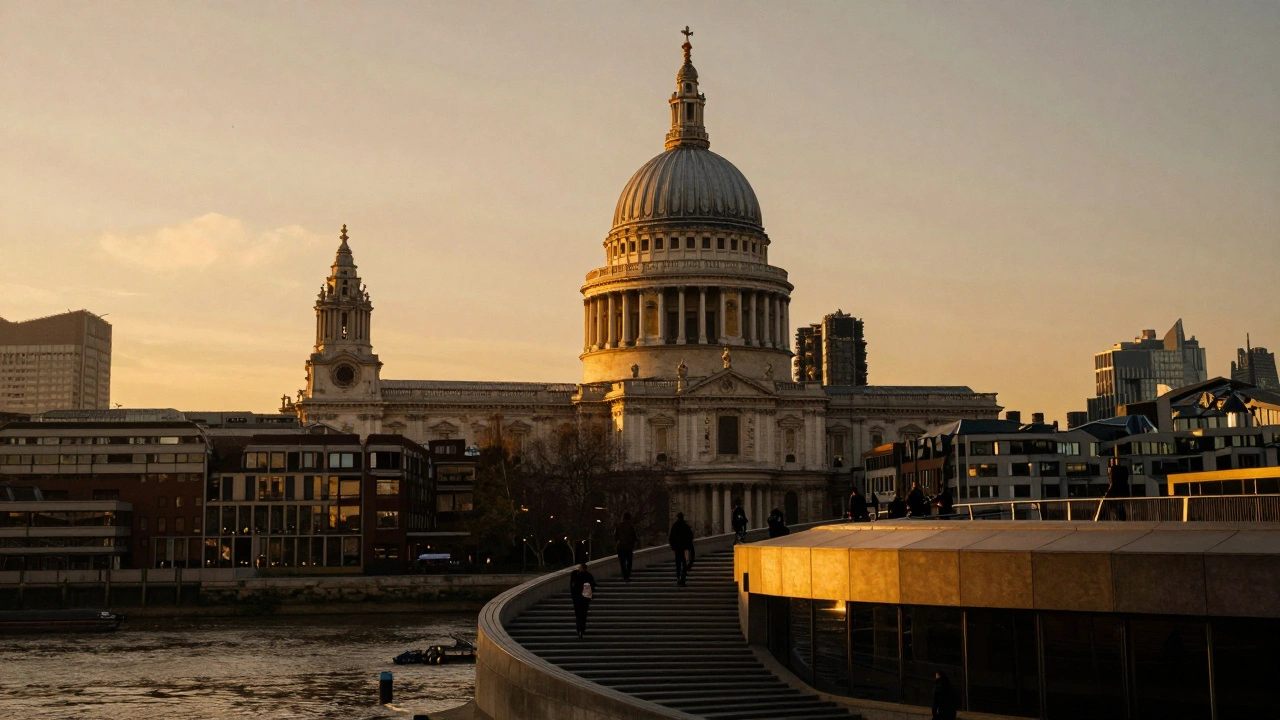
Walk down any street in London and you’ll see it-the sharp spire of St Paul’s rising above the City, the Gothic towers of the Houses of Parliament glowing at dusk, the curved glass of the Gherkin reflecting the Thames. These aren’t just buildings. They’re symbols. Stories carved in stone, steel, and brick. If you’ve ever stood on Tower Bridge watching a ship pass beneath, or paused outside Buckingham Palace as the Changing of the Guard begins, you’ve felt it. London’s iconic buildings don’t just exist-they speak. And understanding them isn’t about memorizing dates or architects. It’s about seeing how history, power, and culture shaped every curve and corner.
Why London’s Buildings Tell a Story
London has been rebuilt seven times. Fire. War. Plague. Empire. Each disaster forced a new kind of architecture. After the Great Fire of 1666, Christopher Wren didn’t just rebuild churches-he reimagined a city. St Paul’s Cathedral wasn’t just a place to worship. It was a statement: London would rise again, grander than before. Its dome, inspired by St Peter’s in Rome, became the tallest structure in England for over 200 years. Today, if you climb the 528 steps to the Golden Gallery, you’ll see the whole city spread out below you. That’s the point. Wren wanted people to look up.
Fast forward to the 19th century. The Industrial Revolution turned London into the world’s first modern metropolis. The Crystal Palace, built for the Great Exhibition of 1851 in Hyde Park, was made of glass and iron-materials no one had used on this scale. It was a temple to progress. When it was moved to Sydenham, it became a public attraction, drawing millions. Even now, its legacy lives in the glass-and-steel towers of Canary Wharf. The difference? Back then, glass meant transparency and democracy. Today, it often means exclusivity.
The Thames as a Museum of Architecture
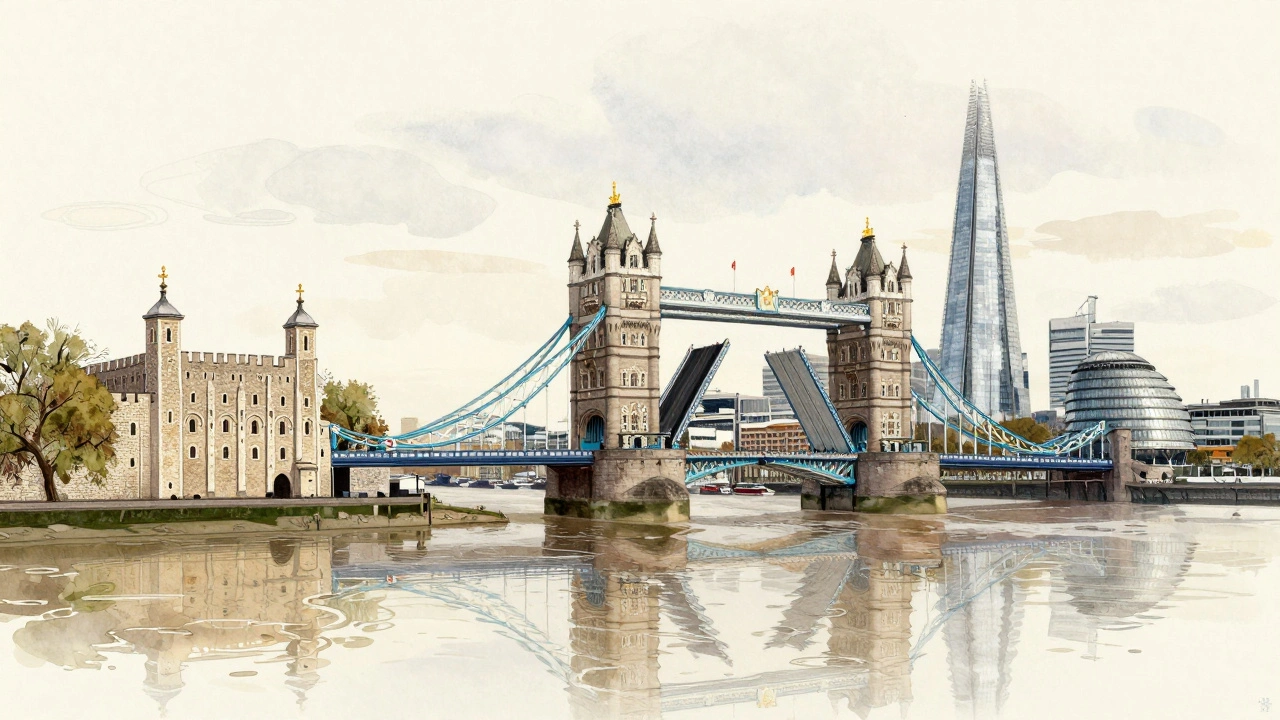
The River Thames isn’t just water. It’s a timeline. Stand on the South Bank and look north. On your left: the Tower of London, with its Norman keep and medieval battlements. Straight ahead: Tower Bridge, the last great bascule bridge built in the British Empire, its Victorian engineering still working after 130 years. To your right: the Shard, Europe’s tallest building when it opened in 2012. Its pointed tip mirrors the spires of the City, a nod to history disguised as modernity.
Each building here was built to serve a purpose. The Tower held prisoners, guarded the Crown Jewels, and hosted royal coronation processions. Tower Bridge was designed to let tall-masted ships pass while keeping road traffic moving-something you’d still struggle with on a Friday evening in Southwark. The Shard? It was built because the City needed more office space, and developers realized that height = prestige. It’s not just a building. It’s a business card for London’s global finance sector.
London’s Quiet Icons: The Buildings You Walk Past Every Day
Not all iconic buildings scream for attention. Some whisper. Take the Royal Exchange. Built in 1566, it was London’s first purpose-built trading floor. Now it’s a luxury shopping centre, but the original stone arches and carved faces still watch over the traders. Or the Barbican Centre-a brutalist masterpiece built in the 1980s over the ruins of WWII bombing. It looks like a fortress from a sci-fi movie, but inside, it hosts the London Symphony Orchestra and free art exhibitions. Locals don’t call it ugly. They call it home.
Then there’s the BT Tower. At 189 metres, it was once the tallest building in the UK. Built in 1964 to carry microwave signals across the country, it was so secret that the government refused to let tourists visit. Today, it’s still used for telecoms, but you can book a dinner in its revolving restaurant. It’s the only place in London where you can eat a Sunday roast while slowly turning 360 degrees over the city.
How to Visit Without the Crowds
Everyone knows the Big Ben clock tower. But few know that the real name is the Elizabeth Tower. And most people don’t realize you can’t just walk in. Tours are booked months in advance and only open to UK residents. But here’s a better tip: go to the Victoria Embankment at sunrise. The light hits the clock faces just right, and you’ll see the whole tower glow orange. No queue. No ticket. Just you and the city waking up.
For the Gherkin, skip the pricey viewing gallery. Instead, head to the roof terrace of the nearby Leadenhall Building. It’s open to the public during lunch hours. Order a coffee, look across at the Gherkin’s tapering shape, and notice how its curves were designed to reduce wind pressure-something engineers learned after the 1990s wind tunnel tests on Canary Wharf’s early skyscrapers.
And if you want to see how London’s past and future collide, take the DLR to Canary Wharf. Walk past the Citigroup Centre, then turn left onto Cabot Square. There, you’ll find a small plaque marking where the original London Docks once stood. Now it’s surrounded by glass towers. But if you look closely, you’ll see fragments of old brickwork still embedded in the pavement-reminders of the ships that once carried tea, spices, and slaves.
What Makes a Building Truly Iconic?
It’s not size. It’s memory. The London Eye didn’t exist 25 years ago. Now it’s inseparable from the skyline. Why? Because it gave Londoners a new way to see their city. Same with the Millennium Bridge-slender, silent, and designed to sway just enough to make you feel like you’re walking on water. It opened in 2000, closed three days later because of excessive wobble, and reopened after engineers fixed it. That’s very London. Imperfect. Resilient. Adapting.
Compare that to the Albert Memorial. It’s ornate, over-the-top, and built by Queen Victoria to mourn Prince Albert. No one uses it. No one climbs it. But it’s still there. Why? Because it represents grief turned into permanence. Iconic buildings aren’t just admired. They’re felt. They hold our pride, our shame, our hopes.

How to Start Learning More
Start small. Pick one building near where you live. Walk around it. Look up. Read the plaque. Google its architect. Visit the London Metropolitan Archives in Clerkenwell-they have original blueprints of the Tower Bridge and the Underground’s first stations. Free entry. No appointment needed.
Join a free walking tour. The London Guild of Guides offers themed walks: “Victorian Engineering,” “Modernist London,” “Buildings That Survived the Blitz.” Or take the Tube to Camden and visit the William Morris Gallery. He didn’t design buildings, but his ideas about craftsmanship shaped how we think about beauty in everyday spaces.
And if you’re feeling adventurous, book a guided tour of the hidden tunnels under the Bank of England. Or climb the dome of St Paul’s at twilight. The bells ring out as the sun sets. People stop. They don’t take photos. They just listen. That’s when you know you’re not just looking at a building. You’re standing inside history.
What is the oldest iconic building in London?
The Tower of London is the oldest, with its White Tower built by William the Conqueror in 1078. It’s survived wars, fires, and royal betrayals. While other buildings have been rebuilt, the Tower’s core remains unchanged for over 900 years.
Why are London’s buildings so different from each other?
London was never planned as a single city. It grew in layers-Roman walls, medieval churches, Georgian squares, Victorian factories, postwar housing, and modern towers. Each era left its mark. Unlike Paris, which was redesigned by Haussmann, London absorbed change without erasing the past. That’s why you can walk from a 12th-century chapel to a 21st-century skyscraper in ten minutes.
Which iconic building in London is the most photographed?
Tower Bridge. It’s not the tallest or the oldest, but its combination of Gothic detail and mechanical engineering makes it visually unforgettable. Add a red double-decker bus crossing beneath it, and you’ve got the classic London postcard. The view from the nearby Tower Bridge Exhibition is free if you book online, and it’s far less crowded than the London Eye.
Are there any lesser-known iconic buildings in London?
Yes. The Hampstead Pergola in North London is a wooden structure built in 1905 that looks like a giant trellis. It’s not famous, but locals treat it like a sacred space. Or the Battersea Power Station-once the largest brick building in Europe, now a luxury development. Its four chimneys are instantly recognizable, and you can still see the original brickwork under the new glass facades.
How do Londoners feel about new skyscrapers like The Shard?
Opinions are split. Some see them as symbols of global success. Others think they block views, displace communities, and turn the city into a playground for the rich. But even critics admit: The Shard changed how Londoners see their own skyline. It forced people to look up again-something the city hadn’t done since the 1960s.
Next Steps: Where to Go Next
Once you’ve walked past the main landmarks, dig deeper. Visit the Museum of London Docklands to see how the city’s trade shaped its buildings. Or take a train to Greenwich and climb the Old Royal Naval College’s dome-designed by Christopher Wren’s rival, Sir Christopher Wren’s student, Nicholas Hawksmoor. It’s quieter, less crowded, and just as breathtaking.
Or simply sit on a bench in St James’s Park, watch the pelicans, and look at the silhouette of Buckingham Palace. That’s London. Not just buildings. A living, breathing story-written in brick, stone, and glass, and still being written today.