London Attractions for Architecture Enthusiasts: A Visual Feast
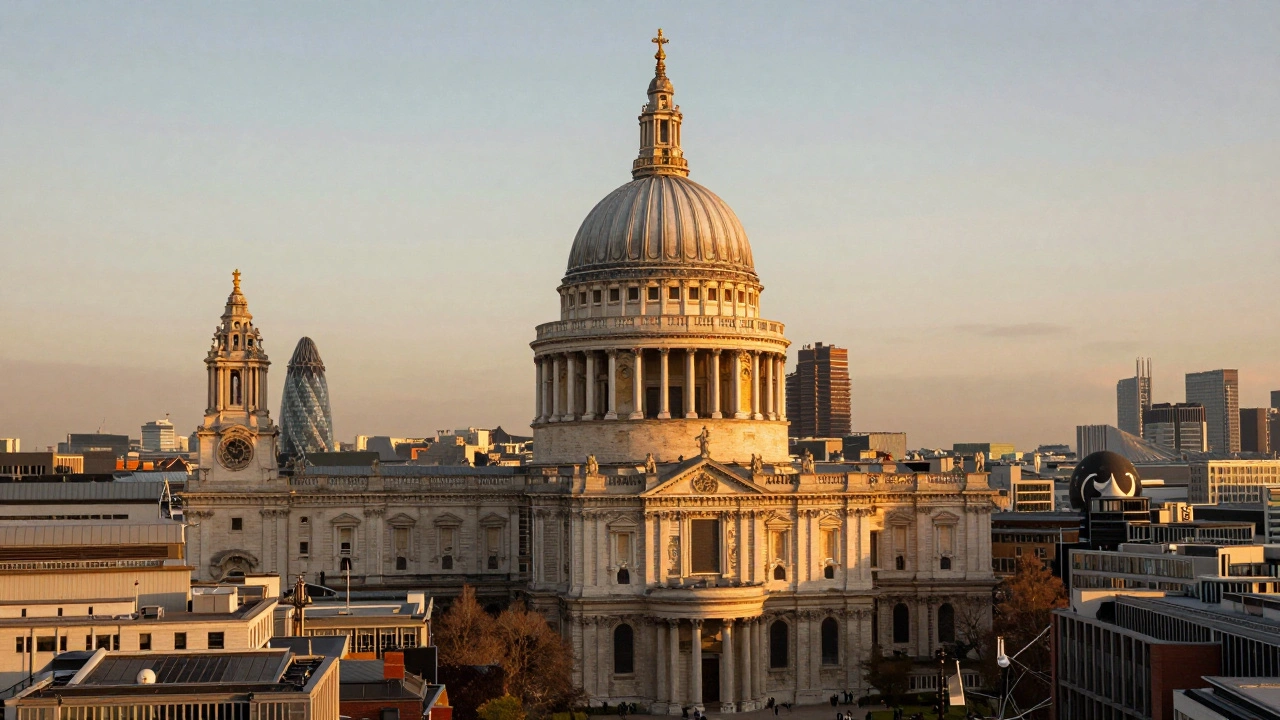
London’s skyline isn’t just a backdrop-it’s a living museum of architectural evolution. From medieval stone towers to glass-and-steel giants, every corner of the city tells a story of innovation, survival, and reinvention. If you’re someone who notices the curve of a parapet, the rhythm of brickwork, or the shadow cast by a spire at golden hour, London is your playground. This isn’t about checking off tourist spots. It’s about walking through spaces where history and modernity don’t just coexist-they collide, complement, and sometimes argue loudly.
St. Paul’s Cathedral: The Crown of the City
When Christopher Wren rebuilt St. Paul’s after the Great Fire of 1666, he didn’t just create a church. He designed a symbol of resilience. The dome, inspired by St. Peter’s in Rome but engineered with English pragmatism, rises 111 meters above the city. Walk around the base and notice how the stone changes texture-some blocks are worn smooth by centuries of London rain, others still sharp from 18th-century carving. Climb the 528 steps to the Golden Gallery, and you’ll see the city spread out like a map only Londoners truly understand: the Thames curves past Tower Bridge, the Shard pierces the clouds, and the City’s financial towers huddle like old men in a pub.
The Tower of London: Stone and Blood
More than just a royal palace, the Tower of London is a fortress built on power. Its White Tower, constructed in 1078 by William the Conqueror, is one of the few Norman structures still standing in its original form. The walls here aren’t just thick-they’re layered with history. Walk the inner bailey and notice how the stonework shifts from rough, irregular blocks to precise, cut ashlar. That’s not just craftsmanship-it’s the evolution of military engineering. The Crown Jewels are housed here, but the real treasure is the architecture itself: the battlements, the moat’s original waterline etched into the stone, the narrow arrow slits that still feel like they’re watching you.
The Shard: When Glass Meets Grit
Shard, designed by Renzo Piano and completed in 2012, didn’t just add height to London’s skyline-it changed how people see the city. At 310 meters, it’s the tallest building in the UK, but its true genius is in its tapering form. The glass facade reflects the sky, the clouds, even the occasional London fog, making it disappear into the atmosphere on dull days. Visit the viewing gallery on the 69th floor and compare the view to the one from the Tower Bridge’s walkway. You’ll see how the Shard leans into the past: its shape echoes the masts of old ships, and its steel frame is anchored by the same Victorian foundations that hold up the nearby railway viaducts. It’s modern, yes-but it’s deeply London.
St. Pancras Renaissance Hotel: Gothic Revival with a Heart
St. Pancras isn’t just a train station-it’s a cathedral to rail travel. The Midland Grand Hotel, now the St. Pancras Renaissance, was built in 1873 as a statement of British industrial pride. The red-brick facade, with its ornate gables and pointed arches, looks like it was dropped from a fairy tale. But look closer. The ironwork on the balconies? It’s original. The stained glass in the booking hall? Still intact. The hotel’s grand staircase, once used by Victorian aristocrats boarding trains to Paris, now welcomes locals grabbing coffee before work. The building survived demolition threats in the 1960s because Londoners refused to let go. Today, it’s one of the few places where you can sit in a 19th-century lounge, sip an Earl Grey, and watch a Eurostar glide past.
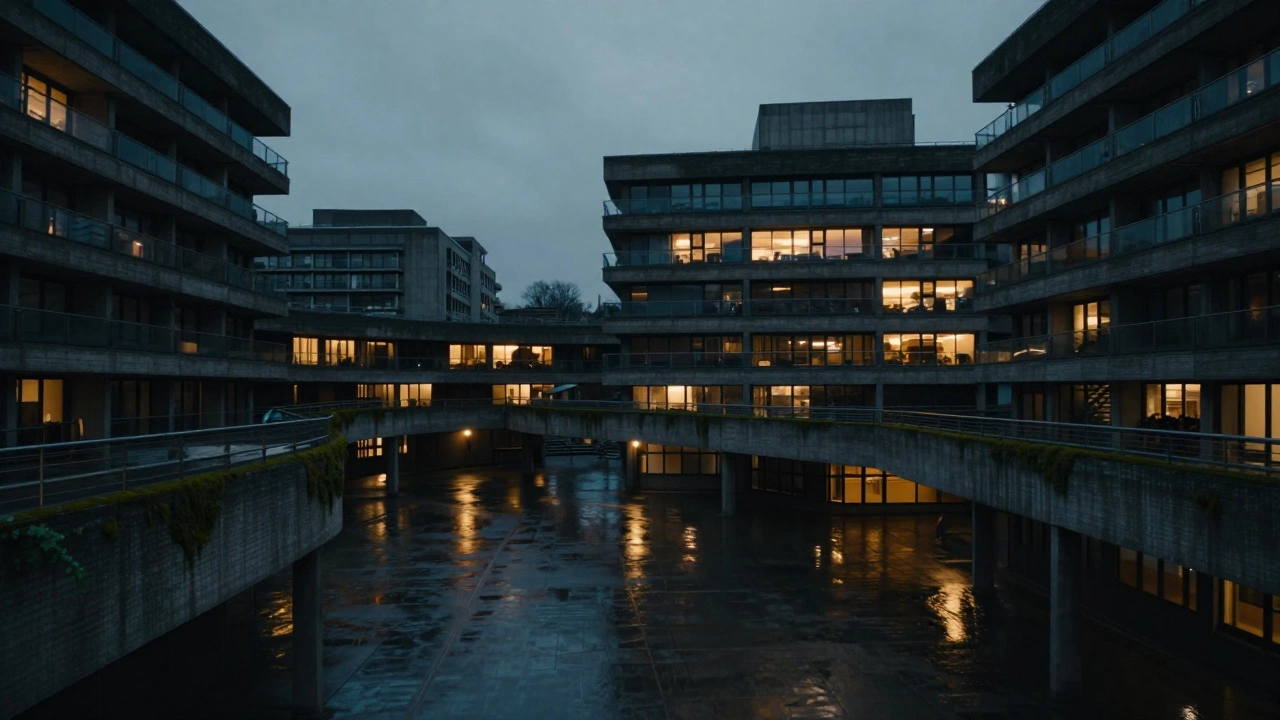
Barbican Estate: Brutalism That Breathe
Barbican isn’t for everyone. Its concrete towers, elevated walkways, and angular courtyards look like something from a dystopian novel. But for those who understand it, Barbican is poetry in reinforced concrete. Built between 1965 and 1982, it was London’s answer to postwar housing crises-bold, communal, and unapologetic. The complex houses over 2,000 homes, a theatre, an arts centre, and a lake. Walk the elevated pathways at dusk and watch the lights flicker on in the windows. Notice how the concrete has weathered-not cracked, but softened. Moss grows in the crevices. Rainwater pools in the courtyards like liquid mirrors. It’s not pretty in the traditional sense. But it’s real. And it’s survived 60 years of London’s weather, politics, and changing tastes.
Leadenhall Market: The Old Soul
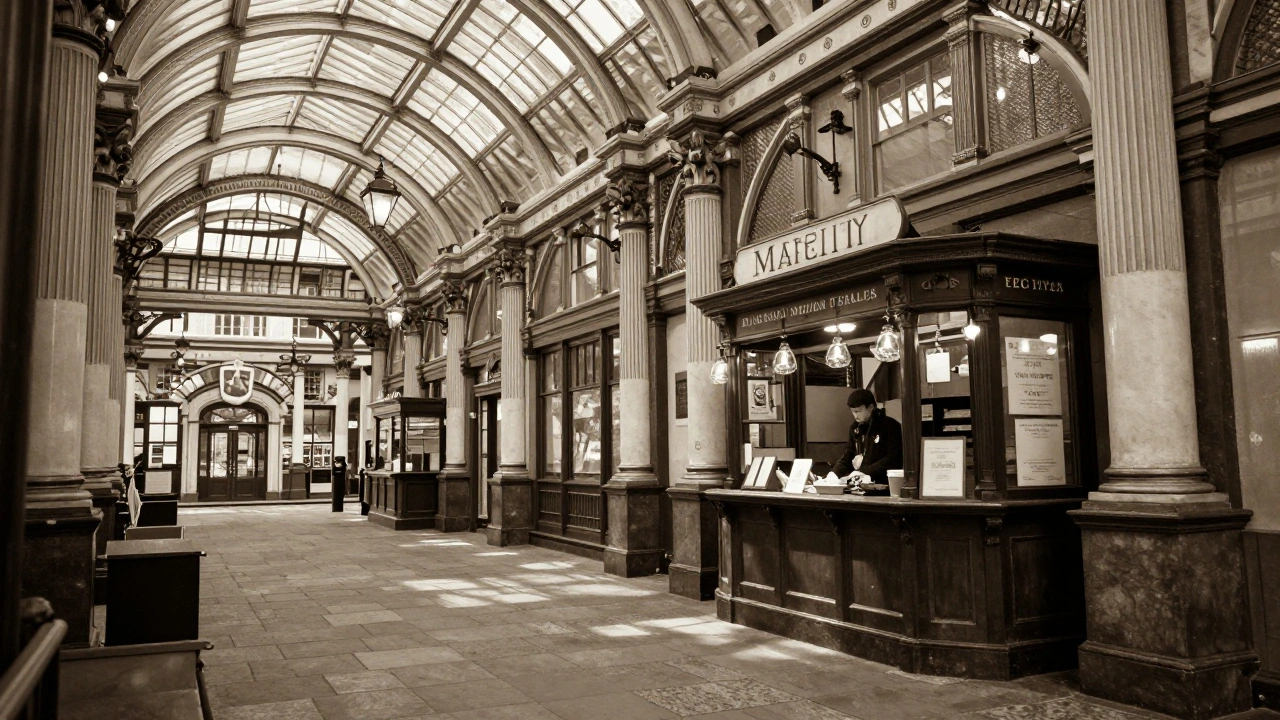
Just steps from the modern towers of the City, Leadenhall Market still feels like stepping into a Dickens novel. The arcade’s curved glass roof, supported by ornate cast-iron columns, dates back to 1881. The floor? Original flagstones, worn smooth by 150 years of shoestrings and horse hooves. This isn’t a tourist trap-it’s a working market. Locals buy fresh oysters from the same stall that’s been there since 1880. The pub at the end? The Eagle and Child, where bankers and bookies still meet over pints. Look up at the wrought-iron lanterns. They were hand-forged in Birmingham, shipped by train, and installed by men who knew every curve of the roof. It’s a reminder: London doesn’t erase its past. It wears it.
Victoria and Albert Museum: Where Craft Speaks
While most tourists head to the British Museum, the V&A is where architecture becomes art. The building itself, opened in 1857, is a masterclass in Victorian design. The main entrance, with its tiled arches and stained-glass dome, was inspired by Islamic architecture-but built with English precision. Inside, the Cast Courts hold full-scale replicas of Michelangelo’s David and Trajan’s Column. But the real architectural marvel? The building’s ventilation system. Hidden behind the ornate plasterwork are original ducts that used steam-powered fans to cool the galleries before air conditioning existed. The museum’s designers didn’t just build a gallery-they built a machine that breathed.
Notting Hill’s Terraced Houses: The Quiet Beauty
Step into Notting Hill after the crowds leave, and you’ll find something quieter but just as powerful: the row houses. These aren’t just homes-they’re a lesson in scale, proportion, and restraint. Built between 1820 and 1860, they follow a strict rhythm: three stories, bay windows, wrought-iron railings, and painted stucco. Look at the doorways. Each one is unique, but all follow the same height-because Londoners knew that harmony matters more than flash. The colors? Not pastels. Real, muted tones: slate blue, ochre, deep green. These aren’t painted for Instagram. They’re painted to fade slowly, to blend into the mist, to last.
How to Experience London’s Architecture Like a Local
- Walk the Thames Path from Tower Bridge to Westminster. You’ll see 10 centuries of design in 4 miles.
- Take the District Line from Earl’s Court to Blackfriars. The stations alone-each with original tiling, lighting, and signage-are time capsules.
- Visit the Geffrye Museum in Kingsland Road. It shows how Londoners lived across centuries, inside their homes.
- Join a free walking tour led by the London Guild of Guides. They don’t just recite dates-they explain why the brickwork on a 17th-century house looks different from a 1920s one.
- Don’t just photograph buildings. Sit on a bench nearby. Watch how the light changes on the facade from morning to dusk. That’s when architecture reveals its soul.
Why London’s Architecture Matters More Than Ever
London doesn’t just preserve its past-it reuses it. The old gasworks in Deptford? Now a tech hub. The Victorian railway arches under London Bridge? Home to craft breweries and street food stalls. The 1930s Art Deco cinema in Brixton? Still showing films, with a new sound system hidden inside the original walls. This isn’t nostalgia. It’s intelligence. Every time a developer tries to tear down a historic building, Londoners push back-not because they hate progress, but because they know what makes this city unique isn’t the tallest tower. It’s the way the old and new hold hands.
Where to Start Your Next Architectural Walk
Start at the Bank of England on Threadneedle Street. Walk west along Lombard Street, past the 17th-century merchant houses. Turn right onto Leadenhall Market. Then head to the Royal Exchange, where the original columns still stand. End at St. Paul’s. Do it on a Sunday morning when the city is quiet. Bring a notebook. Sketch the shapes. Write down the names of the builders you can still read on plaques. You won’t just see architecture. You’ll feel it.
What are the best free architectural sites in London?
St. Paul’s Cathedral’s exterior and crypt are free to explore. The exterior of the Tower of London can be viewed from the grounds without paying. Leadenhall Market is open to the public and free to wander. The Barbican Estate’s courtyards and walkways are publicly accessible. And don’t miss the churchyards of St. Dunstan-in-the-East and St. Bride’s-both feature stunning ruins and quiet, hidden gardens.
Is there a specific time of year to see London’s architecture best?
Late spring and early autumn offer the clearest light and the most comfortable temperatures. The golden hour in May or September makes brick and stone glow. Winter has its own charm-fog wraps around St. Paul’s, and the snow dusts the Barbican’s concrete like powdered sugar. Summer is crowded, but the long days mean you can walk from the Shard to Notting Hill without rushing.
Are there guided tours focused only on architecture?
Yes. The London Guild of Guides offers specialized architectural walks, including ones on Brutalism, Victorian engineering, and modern skyscrapers. The Twentieth Century Society runs monthly tours of postwar buildings. And for a deeper dive, the Architectural Association in Bedford Square offers public lectures on London’s evolving skyline.
What’s the most underrated architectural gem in London?
The Royal Observatory in Greenwich. Not just for the Prime Meridian, but for the 17th-century Flamsteed House-built to house the first British Astronomer Royal. Its proportions, the way the stone weathers, the original leaded windows-it’s a quiet masterpiece that most tourists walk right past.
Can you still see original building materials in modern London constructions?
Absolutely. The Bloomberg Building on Queen Victoria Street uses reclaimed London brick from demolished 19th-century warehouses. The new Crossrail stations have tiles made from the same clay as Victorian tiles, fired in the same kilns. Even the glass on the Walkie Talkie building has a low-iron composition to mimic the clarity of 19th-century plate glass. London doesn’t pretend to be new. It reuses, reimagines, and respects.