The British Museum: London’s Ultimate Haven for History Buffs
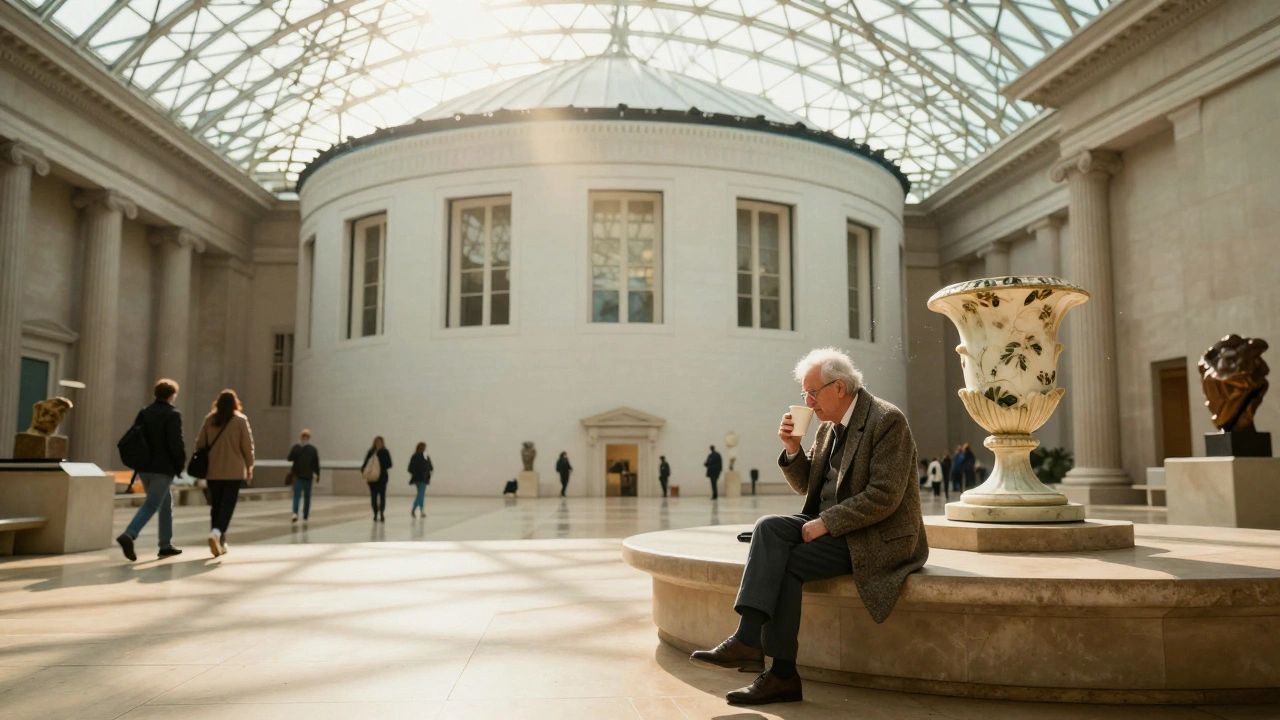
For anyone living in London or just passing through, the British Museum isn’t just another tourist stop-it’s a quiet refuge in the middle of a city that rarely slows down. Tucked between Bloomsbury’s bookshops and the bustle of Tottenham Court Road, it’s one of those rare places where time bends. You can step inside after a long day at work, skip the Tube ride home, and spend an hour staring at a 3,000-year-old Egyptian coffin while sipping tea from a paper cup bought from the café downstairs. No ticket needed. No rush. Just history, raw and real.
More Than Just a Museum
The British Museum opened in 1759, making it the first national public museum in the world. Unlike the Tate Modern or the V&A, it doesn’t charge admission. That’s not an accident. It was built on the idea that knowledge should be free to all, a radical notion in the 18th century and still a rare one today. Walk through the Great Court, under Norman Foster’s glass roof, and you’ll see Londoners of all kinds: a student sketching a Greek vase, a grandmother pointing out Assyrian lions to her grandchild, a tourist from Tokyo snapping photos of the Rosetta Stone like it’s a celebrity.
It’s not just about the artifacts. It’s about the rhythm of the place. On weekday mornings, you’ll find retirees from Kentish Town with their walking sticks and thermoses, sitting on the stone benches near the Parthenon sculptures. On weekends, school groups from Southwark and Hackney spill into the galleries, led by teachers with clipboards and laminated worksheets. The museum doesn’t feel curated for tourists. It feels lived-in. Like part of London’s bones.
The Rosetta Stone: Why It Still Matters
Ask any Londoner where they go when they need to feel grounded, and many will say the British Museum. But if you ask them what they remember most, it’s often the Rosetta Stone. Not because it’s flashy. But because it’s quiet proof that language, like history, is a bridge.
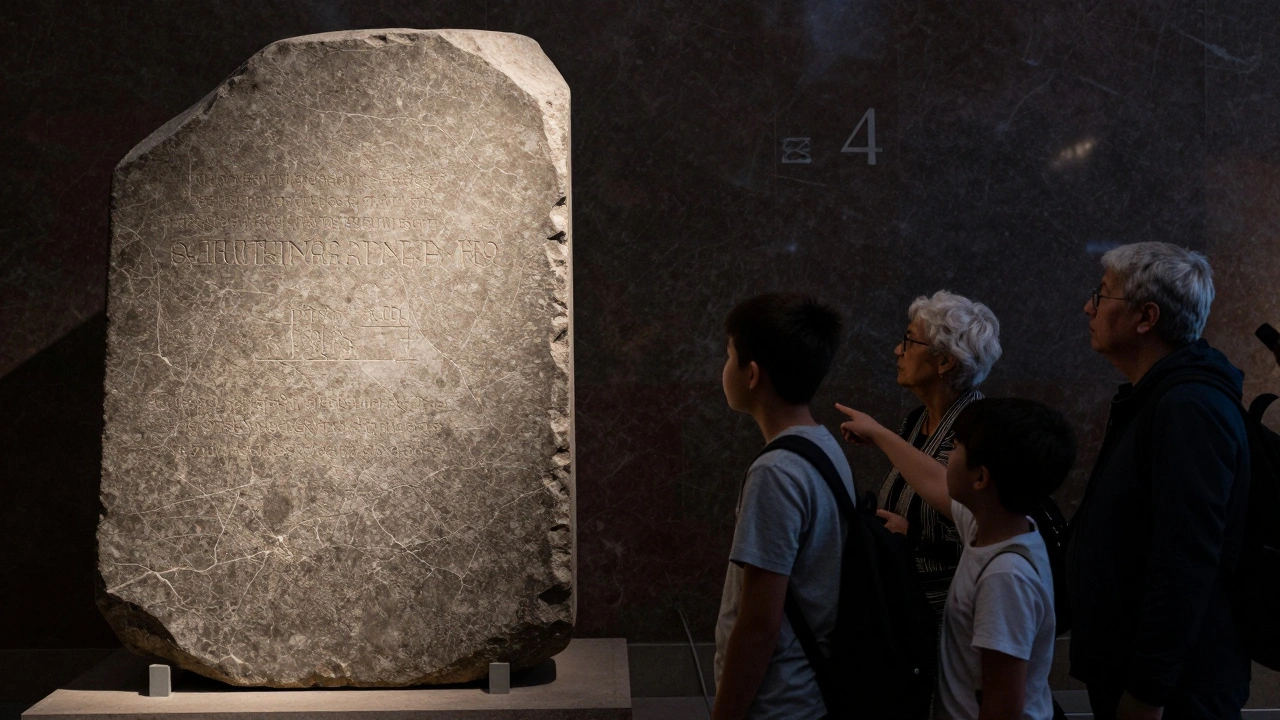
Discovered in 1799 near the Egyptian town of Rosetta (now Rashid), the stone carried the same decree in three scripts: Greek, Demotic, and hieroglyphic. Before this, no one could read Egyptian hieroglyphs. After this, the ancient world unlocked itself. It’s not the most beautiful object in the museum. It’s a dark, cracked slab of basalt. But it’s the one that changed everything. And it sits right in Room 4, under a spotlight, with a line of people waiting to see it-not because it’s Instagram-worthy, but because it’s the reason we know who the pharaohs were.
There’s a plaque nearby that says: “The decipherment of hieroglyphs was one of the great intellectual breakthroughs of the 19th century.” It’s easy to walk past it. But if you stop, if you really look, you realize this stone didn’t just help scholars. It helped all of us reconnect with a world we’d forgotten.
Hidden Corners You Won’t Find on Maps
Most visitors head straight for the Egyptian mummies, the Greek marbles, or the Assyrian bulls. But the real magic of the British Museum lies in the forgotten corners.
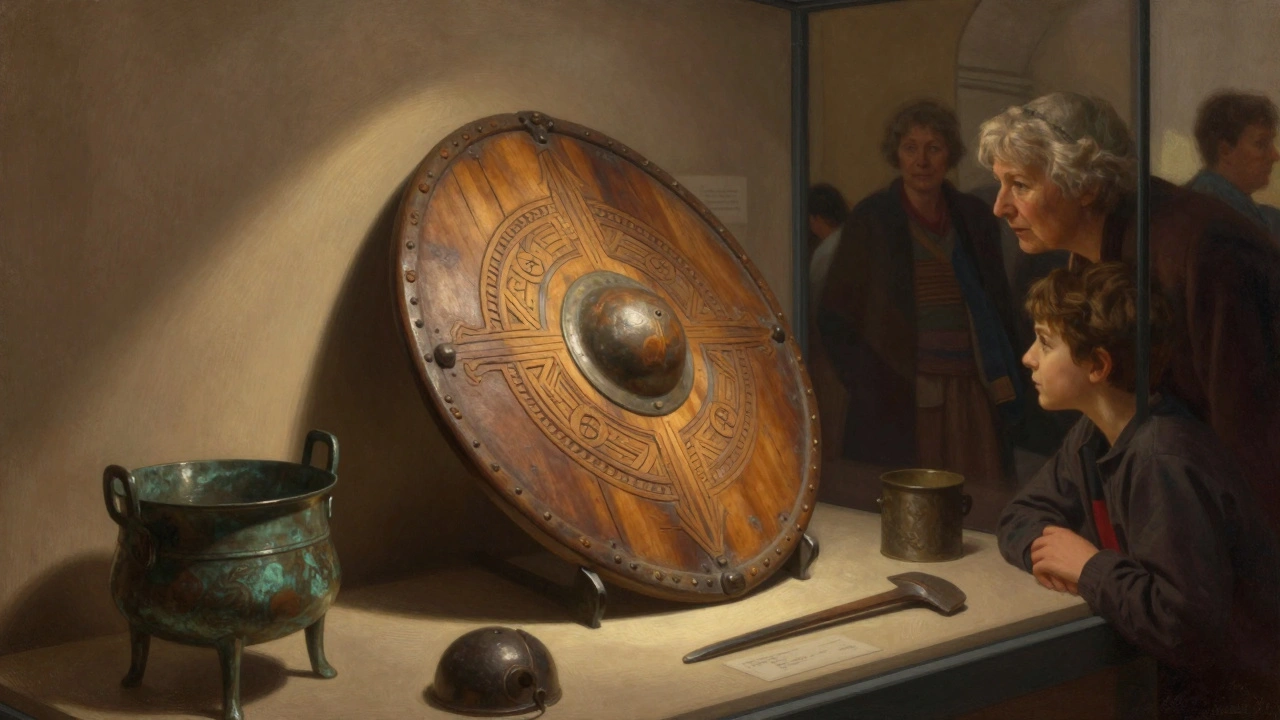
- Room 24: The Iron Age British artifacts-a wooden shield from Llyn Cerrig Bach in Wales, a bronze cauldron from a chieftain’s grave. These aren’t from Rome or Egypt. They’re from the wetlands and hills of ancient Britain, long before London was a city. They’re quiet. They’re humble. And they’re yours to touch with your eyes.
- Room 33: The King’s Library-a grand hall lined with 65,000 volumes donated by King George III. The books are locked, but the space feels alive. You can still smell the old paper, the leather, the ink. It’s the closest thing to stepping into a Georgian gentleman’s study.
- The Enlightenment Gallery (Room 1): This is where the museum began. Display cases from 1759 still hold the original collection: a fossilized elephant tooth, a Chinese porcelain vase, a Viking comb. The labels are handwritten. The glass is thick. It’s like walking into a time capsule from when curiosity was the only currency.
These aren’t the highlights. But they’re the ones that stick with you.
How to Make It Your Own
If you live in London, you don’t need to wait for a holiday to visit. Here’s how to make the British Museum feel like your own:
- Go on a Tuesday or Wednesday morning. The crowds are thin. The light through the Great Court is soft. You can sit by the Portland Vase without anyone elbowing you.
- Grab a coffee from the British Museum Coffee Shop-it’s not Starbucks. It’s local. They roast their beans in Peckham. The flat whites are strong. The pastries are made by a bakery in Islington. Sit by the window. Watch the pigeons outside. No one will bother you.
- Take the free guided tours. They start every day at 11:30 and 14:30. The guides aren’t actors. They’re historians. One woman, Sarah, has been leading tours for 18 years. She knows which statue a child will point to every time. It’s the lion from Nineveh. She says kids always notice the eyes first.
- Use the free museum app. It has audio stories from curators, hidden object hunts for kids, and walking routes through the galleries. One route, called “London’s Ancient Roots,” connects British artifacts to sites you can visit in the city: the Roman wall near the Museum of London, the Anglo-Saxon burial ground in Sutton Hoo (a two-hour train ride from Liverpool Street).
Why It’s More Than a Museum
The British Museum doesn’t just hold history. It holds the quiet pulse of London itself.
Think about it: you can walk from here to the British Library in 15 minutes. To the Foundling Museum in 20. To the Charles Dickens Museum in Bloomsbury in 10. To the pubs of Soho in 25. This museum isn’t isolated. It’s woven into the city’s fabric.
It’s where a Polish nurse on her lunch break from University College Hospital stops to stare at a Babylonian tablet. Where a Nigerian student from King’s College writes a paper on African artifacts. Where a retired teacher from Croydon brings her grandson every Sunday to show him how people used to live.
It’s not about the artifacts being grand. It’s about the people who come to see them. In a city that’s always moving, the British Museum is one of the few places that asks you to pause. To look. To wonder.
And in London, that’s a gift.
What’s Nearby?
Don’t just leave after two hours. Make a day of it. The British Museum sits at the heart of one of London’s most charming neighborhoods.
- Walk 5 minutes to Covent Garden-grab a slice of sourdough from Padella or a sticky bun from Flour Power.
- Head to Camden Passage in Islington, just 15 minutes by Tube, for antique books, vintage maps, and a coffee shop that’s been there since 1972.
- If it’s spring, take the short walk to Regent’s Park and catch the London Zoo’s annual History of the Animal Kingdom exhibit, which often partners with the museum.
- On Friday nights, the museum stays open until 20:00. The lights are low. The music is jazz. It’s like a secret club for people who love quiet.
There’s no rush. No ticket. No line. Just you, the past, and the city.
Is the British Museum really free to visit?
Yes. Entry to the permanent collection is completely free for everyone, every day. No ticket, no reservation, no charge. You can walk in anytime between 10:00 and 17:30 (until 20:00 on Fridays). Some special exhibitions do have a fee, but the core galleries-including the Rosetta Stone, the Parthenon sculptures, and the Egyptian mummies-are always free. This has been the rule since 1759, and it’s one of the reasons Londoners treat it like a second living room.
How long should I spend at the British Museum?
It depends. If you’re just skimming, you can see the highlights in 90 minutes. But if you want to really feel the place, plan for 3-4 hours. Many Londoners come back multiple times a year, each time focusing on a different wing. One visit might be all about ancient Greece. The next, African art. Another, the Roman coins from Londinium. There are over 8 million objects. You won’t see them all. And that’s the point.
Are there good places to eat near the British Museum?
Absolutely. The museum’s own café serves excellent tea and sandwiches made with bread from a bakery in Camden. But for something more memorable, walk to St. John on Smithfield for roast chicken and seasonal vegetables, or Dishoom on Carnaby Street for Bombay-style breakfasts. For a quick bite, Leon on Tottenham Court Road has healthy salads and avocado toast. And if you’re feeling fancy, The French House on Dean Street-just a 10-minute walk-is a legendary Soho pub that’s been serving wine since 1894.
Can I take photos inside the museum?
Yes, photography is allowed in all permanent galleries for personal use. No flash. No tripods. No selfie sticks. You can snap pictures of the Rosetta Stone, the Parthenon frieze, or the Sutton Hoo helmet. Many Londoners take photos not for Instagram, but to remember how something felt. A child’s hand reaching toward a 2,000-year-old clay pot. The way light falls on a Viking sword. Those moments matter more than the picture.
Is the British Museum suitable for children?
More than you think. The museum has free family trails, activity packs, and interactive touch screens in every major gallery. The “Ancient Egypt Adventure” trail lets kids find hidden scarabs and solve puzzles. The “Mystery of the Roman Coins” game teaches history through play. And the Great Court has a giant, soft sculpture of a dinosaur made from recycled materials-perfect for little ones to climb on. Many London parents bring their kids here not to teach them history, but to let them feel it.